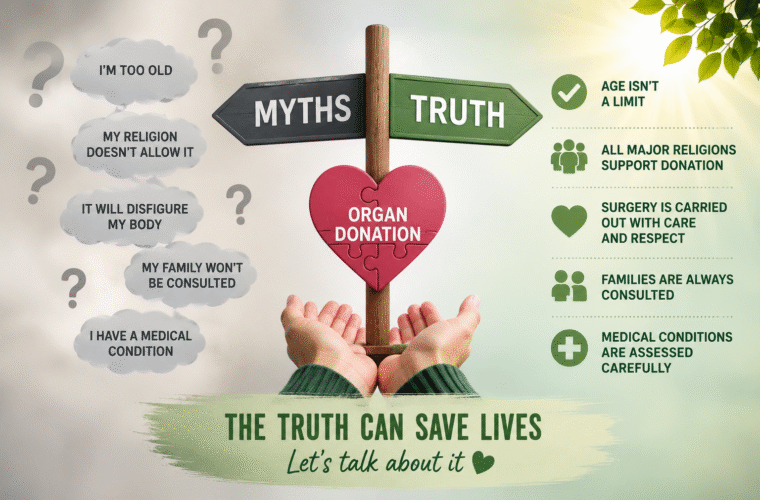
Myth 1: Doctors Won’t Try As Hard To Save Me If I’m An Organ Donor
The Truth
This is one of the most common fears people have, but it is completely untrue.
Doctors treating a patient will always do everything possible to save their life. Organ donation is only considered after death has been confirmed according to strict medical criteria. The healthcare professionals caring for a patient are separate from the transplant teams involved in organ donation and transplantation.
Myth 2: The NHS Can Take My Organs Without Anyone Knowing
The Truth
The UK now operates an opt-out system, but that does not mean organs are automatically taken without discussion.
People still have a choice. You can register a decision to donate, opt out, or appoint someone to make the decision on your behalf. Families are consulted when organ donation becomes a possibility, and NHS staff work closely with loved ones throughout the process.
The most important thing anyone can do is talk openly with their family about their wishes so everyone knows your decision.
Myth 3: I’m Too Old Or Too Unhealthy To Be A Donor
The Truth
Many people wrongly assume their age or medical history automatically prevents them from becoming a donor.
In reality, there is no upper age limit for joining the NHS Organ Donor Register. Medical specialists assess each person individually at the time of donation. Even people with certain illnesses may still be able to donate organs or tissue that could help others.
The message from NHS Blood and Transplant is simple: don’t rule yourself out.
Myth 4: My Religion Doesn’t Allow Organ Donation
The Truth
All major religions and belief systems represented in the UK support or are open to the principles of organ donation and transplantation.
Many faith groups view organ donation as an act of generosity and compassion. NHS Blood and Transplant works closely with faith leaders and communities to ensure donation can proceed in ways that respect religious and cultural beliefs.
If you have concerns, it is worth speaking with your faith leader and reading guidance specific to your religion.
Myth 5: Organ Donation Will Affect My Funeral
The Truth
Many people worry that organ donation will delay funeral arrangements or affect how their loved one looks afterwards.
The reality is that donation is carried out by highly skilled surgical teams who treat donors with dignity and respect at all times. NHS guidance confirms that organ donation does not normally prevent families from having open-casket viewings or making their preferred funeral arrangements.
Families’ cultural, religious and funeral wishes are always taken into consideration throughout the process.
Final Thoughts
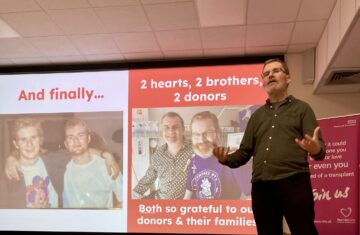
Before my transplant, I understood organ donation from one perspective. After receiving a donor heart, I understand it from another.
Behind every transplant is a family who made an extraordinary decision during an unimaginably difficult time. By understanding the facts and challenging myths, more people can make informed choices and potentially help save lives in the future.
Most importantly, whatever your decision is, please Share Your Wishes with your loved ones.